Bathroom Mold Removal in Lakeland, FL
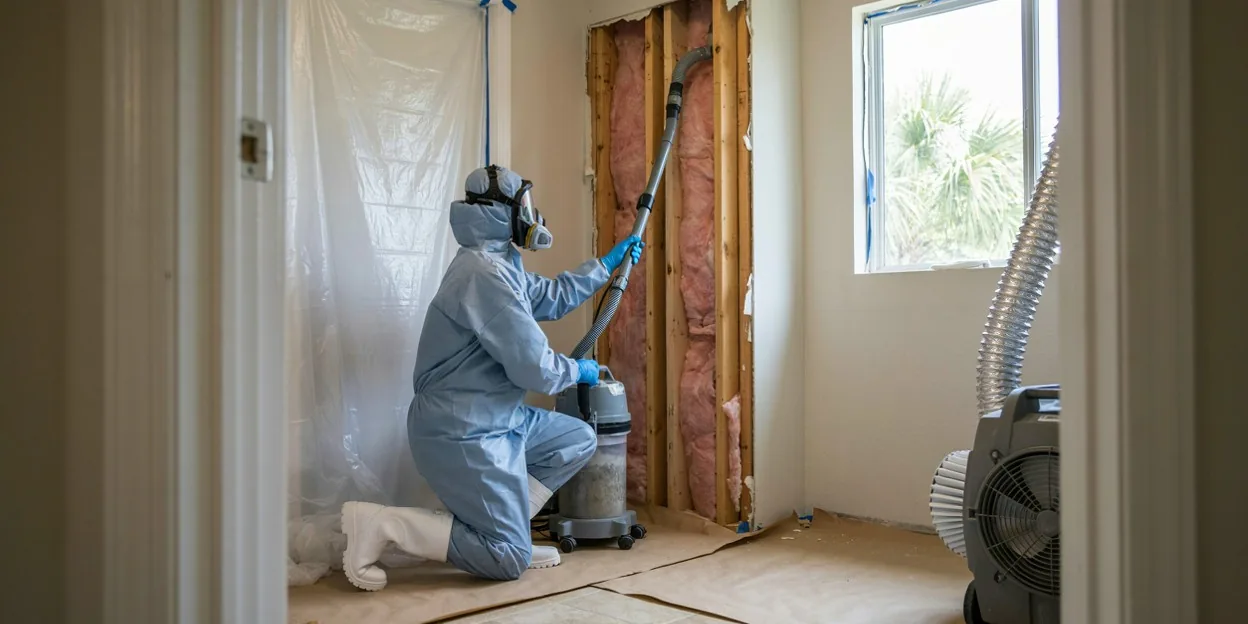
The bathroom in your Dixieland bungalow was added in the 1940s off the back porch. It has a window that has been painted shut for decades and no exhaust fan, and the ceiling grows gray spots every summer that you scrub off every spring. This year the spots came back in a month, and the ceiling plaster is soft above the shower. This site connects you by phone with an independent local provider who does bathroom mold removal in Lakeland and across Polk County.
Shower steam or a leak: the first thing the crew sorts out
A bathroom grows mold two ways, and the fix is different for each. Steam from a shower in a room with no working fan condenses on the coolest surface, which is the ceiling or the outside wall, and grows mold on the paint. A leak behind the wall, from a supply line, a drain, or a shower pan, soaks the material from the inside and shows up as soft plaster or drywall, a stain that spreads, or a floor that gives.
The crew meters the ceiling, the wall behind the shower valve, the floor around the toilet, and, in a bungalow, the subfloor from the crawl space below. A high reading behind the valve or under the pan is a leak and a plumber's job before anything else. Readings that are dry everywhere but the ceiling surface point to the steam.
Open the window, run a fan, and skip the bleach
Until the crew comes, open the bathroom window after every shower if it still opens, or set a box fan in the doorway pointing out. Leave the bathroom door open. Do not bleach the ceiling again; it wets the plaster, whitens the surface, and leaves the growth in place to return.
Look under the sink and behind the toilet for a damp floor. In a bungalow, if you can get under the house, look up at the bathroom floor with a flashlight for dark wood or dripping. Take photos of what you find.
Soft plaster out, lath cleaned, and a fan before the ceiling closes
Inside containment the soft plaster or drywall comes out past the meter line, and the lath, the joists, and the framing above the shower are HEPA vacuumed and wiped. If the shower pan or a valve was leaking, the wet wall behind the tile comes out too, and the tile and the plumbing are repaired before anything is closed. The crew runs drying until the framing and the subfloor read dry.
Then the moisture gets fixed: an exhaust fan ducted outside, or a window that opens, or both. A ceiling closed without one grows the same spots by next summer. If the growth is on an outside block wall, it runs as mold removal. A smell that outlasts the cleanup is mold odor removal. Putting the ceiling and the tile back is mold damage repair.
Bungalow additions, ranch hall baths, and venting into the attic
Lakeland's oldest neighborhoods, Dixieland, Lake Morton, Lake Hunter Terrace, and Beacon Hill, were platted between 1906 and 1923 and are full of frame bungalows that got their bathrooms added later, often in a back-porch enclosure with a window and no fan. The 1950s through 1980s block ranches in Cleveland Heights and Lakeland Highlands usually have a hall bath with no window at all and a fan that vents into the attic rather than through the roof, so the steam ends up on the attic side of the ceiling.
Either way the outdoor air is too wet to dry the room on its own for most of the year. Florida licenses mold remediators as a separate trade under Chapter 468, Part XVI, and the provider represents its own license. Replacing the fan, the tile, or the plumbing is contractor work, and a bathroom rebuild in a city historic district may need a permit from the City of Lakeland before it starts.
Calling about a bathroom in Lakeland
Have the address, the age of the house, whether the bathroom has a fan that vents outside, and whether the spots are on the surface or the surface is soft. Say whether the floor around the toilet or under the sink is damp. Call (863) 375-7712.