Mold Removal in Highland City, FL
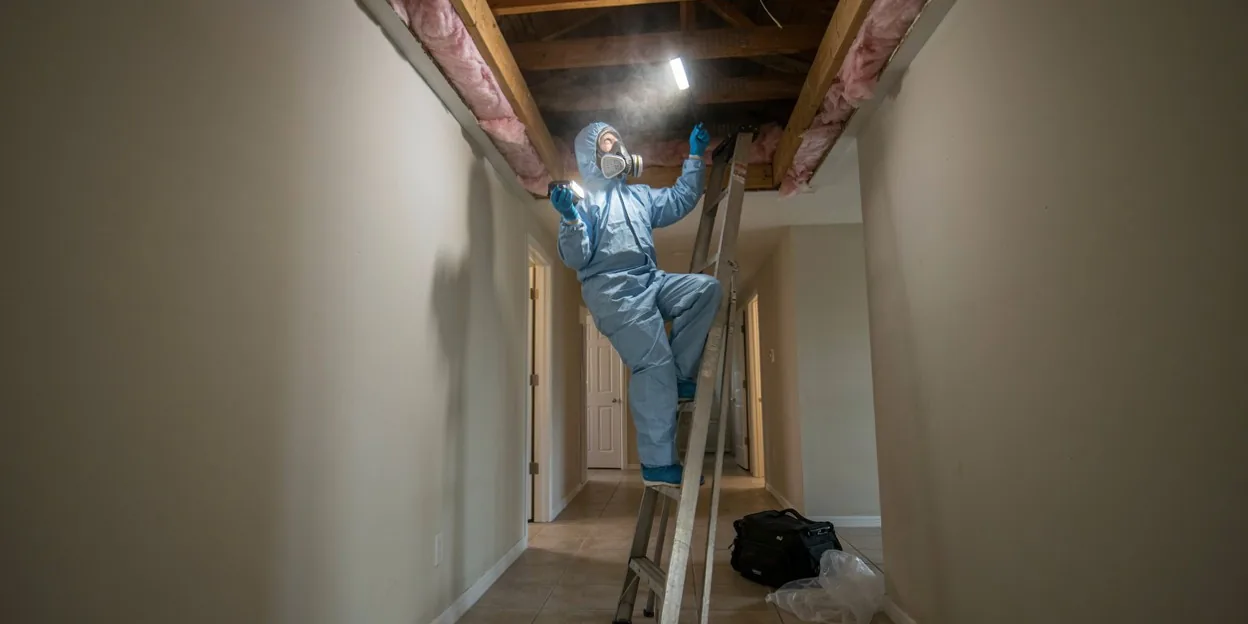
Highland City is the unincorporated community along US 98 south of Lakeland, west of Lake Hancock, that has gone from a crossroads to a corridor of subdivisions since the 2000s. The housing is a few 1950s and 1960s block houses near the old center and thousands of 2005-and-newer stucco houses on former pasture and grove land between the highway and the lake.
New houses on flat former grove land share one habit: the slab edge stays damp after a storm, and the stucco at the window corners cracks as the house settles into the sand. Inside, they are tight, with the air handler in a closet or the garage and a unit sized to cool fast rather than to dry the air.
A Highland City call on this line reaches an independent local mold provider who covers the US 98 corridor. That provider meters the house and writes the scope.
Highland City mold removal, in the subdivisions along US 98
A stain at a cracked stucco corner is mold removal. A film in every closet after a vacant, humid summer is whole-home mold remediation. A musty smell each time the system cycles is HVAC mold cleaning.
The county desk and the county's emergency office
Highland City is outside any city, so rebuild permits go to the county, and the county's Emergency Management office is the one that posted the shelter and debris schedules after Ian and Milton; its storm pages are the record of which weeks the power was out.
Call (863) 375-7712 and describe the wall or the smell. We put you through to an independent mold provider serving Highland City.
Services Available in Highland City
Mold Removal
Growth on drywall behind a leaking supply line, a window that took wind-driven rain, or a wet slab edge: room sealed, wet board cut to the meter line, framing cleaned and dried.
Black Mold Removal
A dark patch on a wall or ceiling handled by how far the water went, not its color: containment, porous material out, block and framing cleaned, leak fixed before closing.
Whole-Home Mold Remediation
A house that sat wet after Milton, Ian, or a burst line while you were away, mapped room by room and cleared in zones as one project.
HVAC Mold Cleaning
Coil, drain pan, and condensate line cleaned or replaced when the air handler in a Lakeland closet or garage sweats through a nine-month cooling season.
Bathroom Mold Removal
Growth behind a vanity, under a shower pan, or on a bungalow bathroom ceiling with no fan, removed with the leak or the venting fixed first.
Attic Mold Remediation
Growth on roof decking under lifted shingles or around a sweating duct, cleaned and treated once the roof and the insulation are dealt with.
Mold Odor Removal
A musty smell in a house that looks fine, traced to the wet material under the floor or behind the cabinet, then removed and treated.
Mold Damage Repair
Drywall, baseboard, cabinet bottoms, and ceiling put back after removal, once the slab and framing read dry and the water source is repaired.